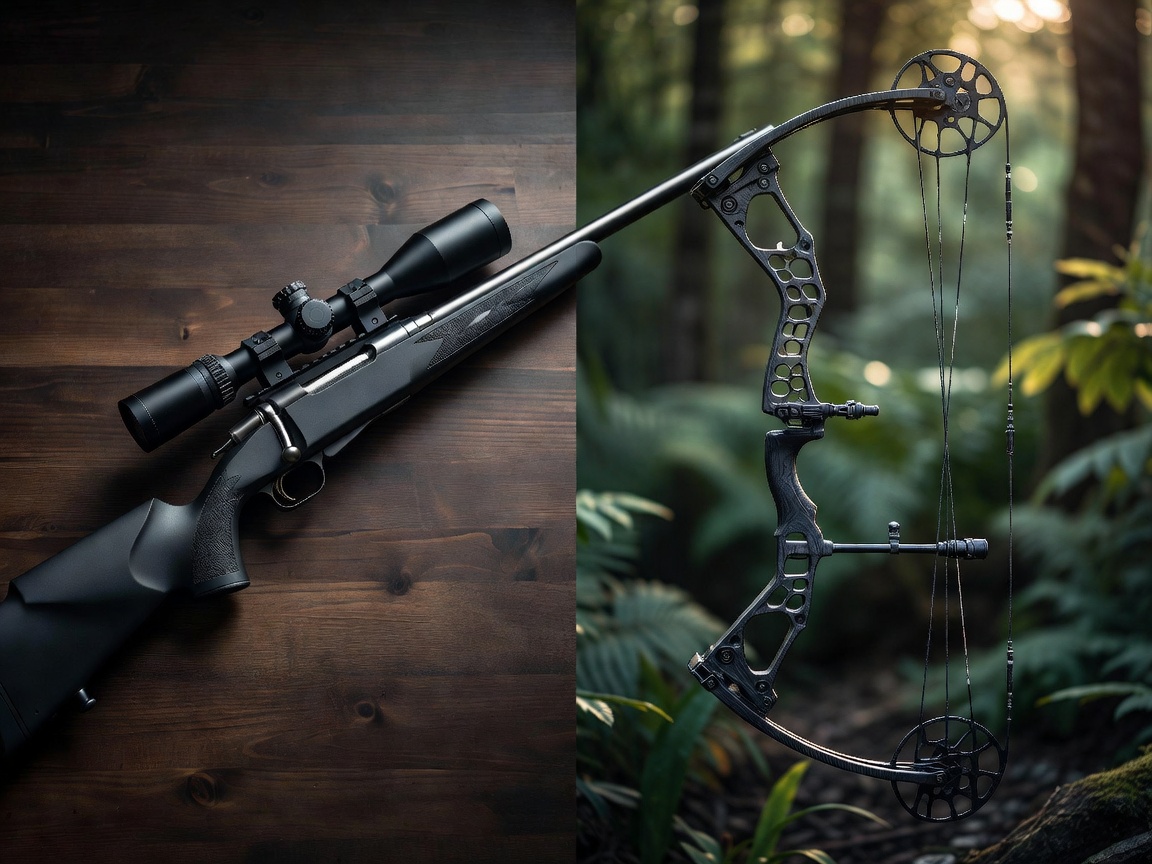
The choice between picking up a bow or shouldering a rifle is one of the most defining decisions a hunter makes. Both disciplines require a high degree of respect for the animal and dedication to practice, but the mechanics, strategies, and experiences they offer are fundamentally different.
Effective Range and Margin of Error
The most obvious distinction is the effective lethal range. A modern centerfire hunting rifle, paired with a quality optic, allows a proficient marksman to ethically harvest game at hundreds of yards. The sheer velocity and hydrostatic shock of a rifle bullet cause rapid trauma, offering a wider margin of error regarding placement.
Bowhunting, conversely, is a game of extreme proximity. The ethical range for the vast majority of bowhunters is under 40 yards, with many preferring shots under 20. An arrow kills via hemorrhage caused by razor-sharp broadheads severing vital organs. This requires surgical precision. A shot that hits heavy bone (like the shoulder blade) with an arrow can result in a non-lethal wound and a lost animal.
Stealth and the Drawing Motion
When rifle hunting, minimizing movement is important, but you often rest your firearm on a support well before the animal steps into view. Firing requires only a subtle squeeze of the trigger.
Bowhunting demands that you draw the string back—a massive, sweeping physical movement—often while the animal is within visual range. Beating an animal's sharp eyes while drawing a bow is one of the most difficult elements of archery hunting. It requires waiting for the animal's head to be obscured behind a tree or turning away, demanding immense patience and nerve control under pressure.
Season Dates and Pressure
In terms of sheer opportunity, bowhunters usually have a significant advantage. Wildlife agencies typically grant archery seasons much longer timeframes, often opening earlier in the fall and extending later into the winter. Bowhunters frequently get to hunt the peak of the rut (breeding season) when animals are highly active.
Rifle seasons are typically shorter, sometimes lasting only a few days or weeks, to control the harvest rate. The woods are generally much more crowded during rifle season, altering animal behavior as they react to increased hunting pressure and loud gunshots.
The Skill Curve
Learning to shoot a rifle accurately enough to hit the vital zone of a deer at 100 yards can often be achieved in a few sessions at the range with proper instruction. The rifle does much of the mechanical work.
Archery requires developing muscle memory, consistent anchor points, and an understanding of how trajectory arcs over distance. The bowstring must be pulled back with your own strength, and minor flaws in your physical form will throw an arrow drastically off course. It requires year-round practice to maintain proficiency.
Which is Right for You?
If your primary goal is maximizing your chances of securing meat for the freezer, rifle hunting is the most efficient and forgiving method. If you crave intense, close-quarters encounters with wildlife, enjoy a long, uncrowded season, and relish a steep technical challenge, bowhunting offers an unmatched adrenaline rush. Many hunters ultimately participate in both, allowing them to extend their time in the field across all seasons.