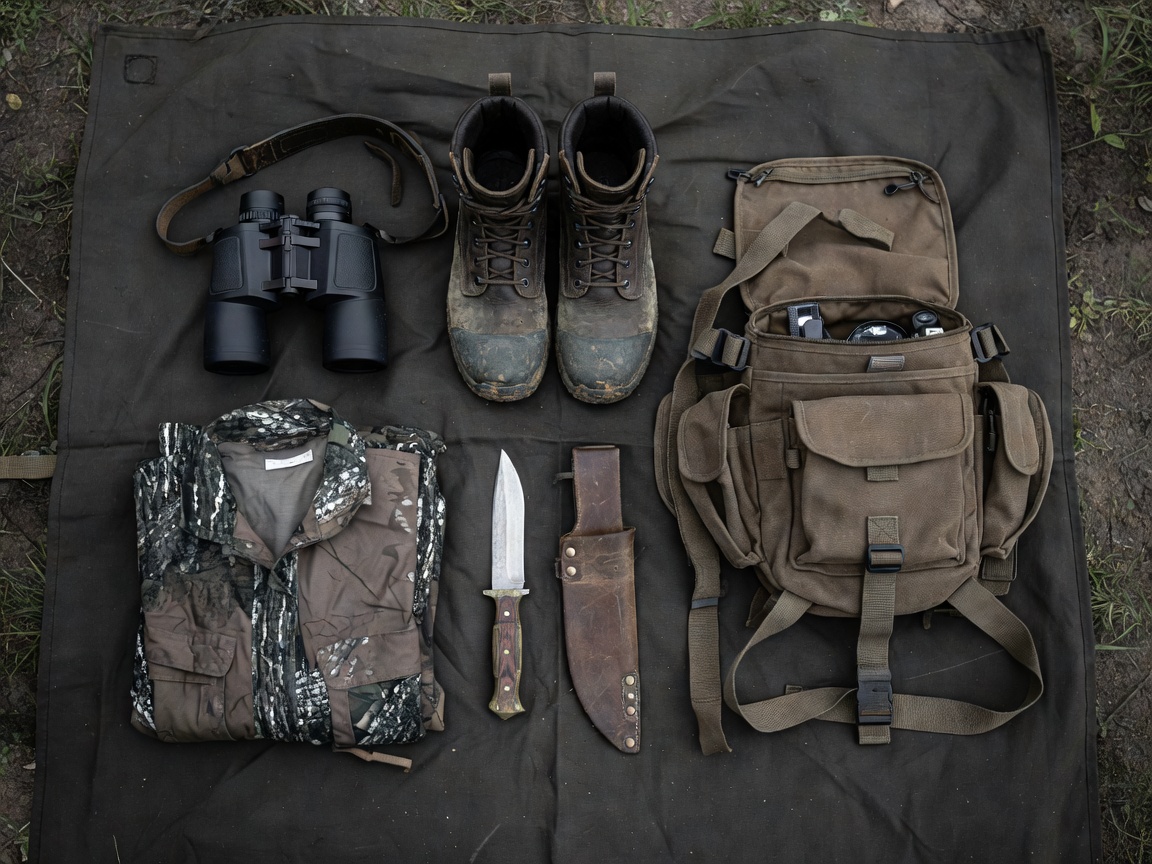
Stepping into the wilderness requires more than just a weapon and good intentions. The right gear can mean the difference between a successful, comfortable hunt and a miserable, dangerous ordeal. While the market is flooded with endless gadgets promising guaranteed success, seasoned hunters know that mastering a few critical categories of gear is all that truly matters.
The Layering System
Weather is the single most unpredictable variable in hunting. To manage your core temperature across varying exertion levels and shifting forecasts, you must adopt a proper clothing layering system. Avoid cotton at all costs, as it retains moisture and dramatically increases the risk of hypothermia.
- Base Layer: The foundation of your system. Choose merino wool or advanced synthetic fabrics designed to wick sweat rapidly away from your skin.
- Mid Layer: This is your primary insulation. Fleece or grid-fleece pullovers trap dead air to keep you warm while remaining breathable during active hiking.
- Insulation Layer: Often packed away until you are stationary (like sitting in a blind or tree stand). Packable down or synthetic puffy jackets excel here.
- Outer Shell: A windproof and waterproof layer to block driving rain, snow, and harsh winds. Look for quiet fabrics that won't rustle loudly when drawing a bow or shouldering a rifle.
Footwear Fundamentals
Your boots are arguably the most critical piece of gear you own. If your feet fail, the hunt is over. When evaluating hunting boots, consider the terrain and the season. Early-season hunts in arid, rocky environments call for uninsulated, stiff-soled boots with excellent ankle support. Conversely, late-season, stationary hunts in freezing temperatures require heavy insulation (often 800g to 1200g of Thinsulate or similar material) and a waterproof membrane.
Always break in your boots weeks before the hunt. Pair them with high-quality merino wool socks and carry a small blister treatment kit in your pack. A minor hot spot can turn into a debilitating injury within miles if left ignored.
Optics: Seeing is Succeeding
In most hunting scenarios, you spend vastly more time looking for animals than you do shooting at them. Investing in high-quality optics saves you miles of walking and allows you to evaluate targets hidden in heavy brush or across massive canyons.
A standard pair of 10x42 binoculars is the sweet spot for the majority of hunters, offering a wide field of view and enough magnification to pick apart distant tree lines. For expansive western landscapes, a spotting scope becomes invaluable. When purchasing optics, prioritize glass quality over sheer magnification; cheap glass will cause eye strain and fail in low-light conditions at dawn and dusk, precisely when game is most active.
The Pack
A daypack must comfortably carry your layers, water, food, first-aid kit, and field dressing tools. For big game hunting, especially in the backcountry, you need a pack with a rigid frame capable of hauling heavy loads of meat. An internal frame pack designed for hunting will feature a "meat shelf" allowing you to secure heavy quarters tightly against your spine, maintaining your center of gravity.
Survival and Navigation
Technology has revolutionized navigation through GPS units and satellite phone apps, but batteries fail and screens crack. Always carry a physical topographic map of your area and a reliable compass, and know how to use them.
Additionally, an emergency kit should be a permanent fixture in your pack. It should include water purification tablets, a fire-starting kit (windproof matches, lighter, and tinder), a space blanket, headlamp with extra batteries, and a basic medical kit equipped to handle severe cuts and stabilize sprains.
Ultimately, hunting gear is highly personal and heavily dependent on your specific environment. Start with these foundational pillars, buy the best quality you can afford in the categories that matter most (boots and optics), and refine your loadout through trial, error, and time spent in the woods.