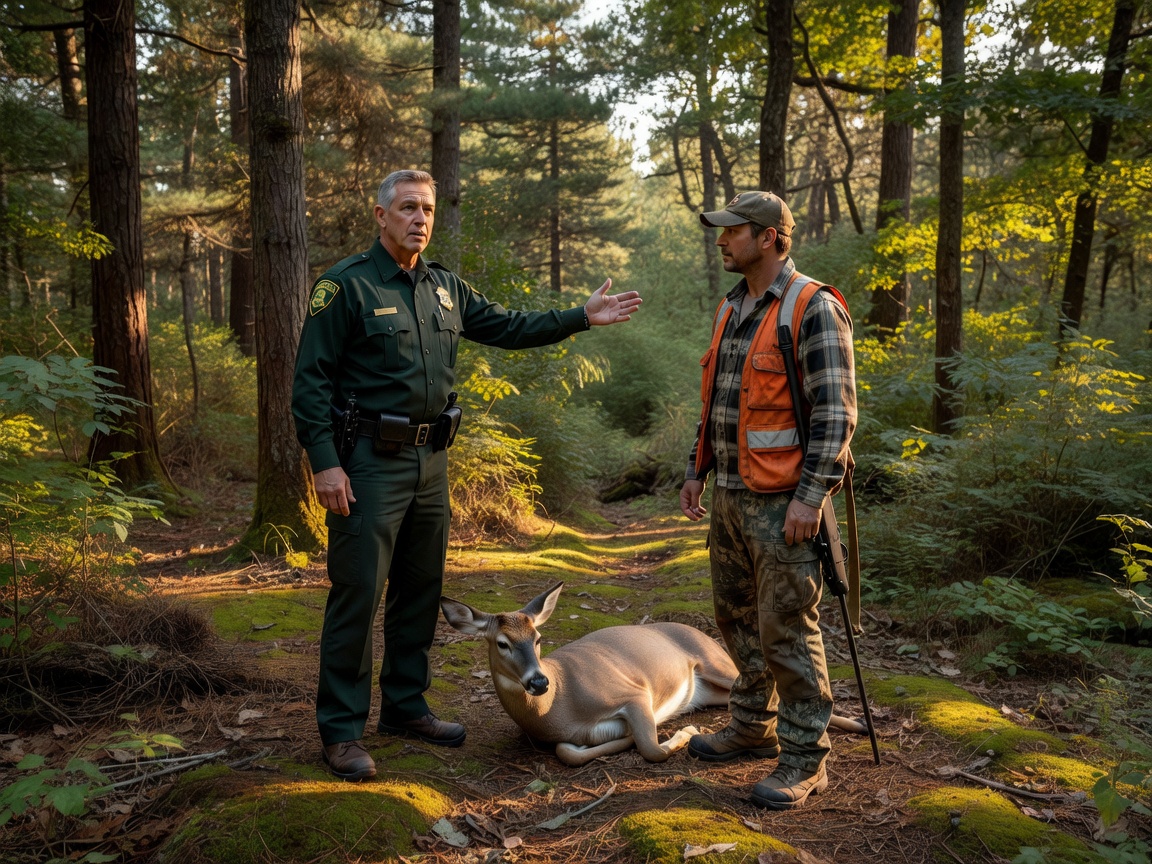
Hunting is heavily regulated to ensure sustainable wildlife populations, protect habitats, and guarantee safety. Ignorance of the law is never a valid defense in the field. Game wardens and conservation officers strictly enforce these rules, and violations can result in heavy fines, confiscation of gear (including firearms and vehicles), and permanent loss of hunting privileges.
Hunter Education Certification
In almost all jurisdictions, anyone born after a certain date must complete an approved Hunter Education course before purchasing a hunting license. These courses cover firearm safety, wildlife identification, basic survival, and hunting ethics. Proof of completion is usually required when buying your first license.
Licenses vs. Tags
A common point of confusion for new hunters is the distinction between a license and a tag.
- Base License: A general permit that legally registers you as a hunter within that state or province. It often covers small game and upland birds, but it does not permit you to harvest big game.
- Tags (or Permits): Specific authorizations for individual large animals (e.g., one antlered deer, one wild turkey). A tag must be carried during the hunt. Immediately upon harvesting the animal, the tag must be validated (usually by cutting out the date) and attached to the carcass before moving it.
Seasons and Zones
Wildlife agencies manage game populations by dividing territories into specific Wildlife Management Areas (WMAs) or zones. Rules can change drastically from one zone to the next. For example, Zone A may allow the harvest of antlerless deer to reduce overpopulation, while neighboring Zone B may restrict harvest to mature bucks only to encourage herd growth.
Furthermore, seasons dictate when you can hunt and what weapon you can use. Archery seasons typically open first, followed by muzzleloader, and finally general firearms seasons. It is strictly illegal to use a centerfire rifle during a designated archery-only season.
Bag Limits and Reporting
Bag limits define the maximum number of animals a hunter may legally kill. There are daily bag limits (common for migratory birds and small game) and seasonal bag limits (common for big game). Exceeding these limits is considered poaching.
Many jurisdictions now require mandatory harvest reporting. After attaching your tag, you must register your kill via phone or internet within a specified timeframe (often 24 to 48 hours). This data is critical for biologists to track population health and set future quotas.
Transport and CWD Rules
With the spread of Chronic Wasting Disease (CWD), a fatal neurological illness affecting deer, elk, and moose, strict transport rules have been enacted. If you harvest an animal in a known CWD-positive zone, you are often legally prohibited from transporting the intact carcass across state lines or out of that zone. Typically, you must quarter the animal, debone the meat, and leave the spinal column and brain material at the kill site.
Always consult the official, current-year hunting regulation digest published by your local Department of Natural Resources or wildlife agency. Regulations change annually based on environmental factors, disease outbreaks, and population surveys. Read the book, map your boundaries, and hunt legally.